The government of Cuba has stepped up its accusations against the United States over the island’s deepening electricity and economic crisis, while cautiously acknowledging reports of a proposed $100 million American aid package amid worsening humanitarian conditions.
In statements released this week, Cuban President Miguel Díaz-Canel and senior officials said the country’s severe power shortages, fuel scarcity and broader economic hardship are the result of long-standing sanctions imposed by the United States, which Havana described as an intensified “energy blockade.”
Cuba is currently grappling with one of its most severe economic downturns in years, characterised by prolonged nationwide blackouts, shortages of food and medicine, rising inflation, and growing public frustration.
Díaz-Canel said the national electricity system had become “especially tense,” warning of a projected deficit exceeding 2,000 megawatts during peak evening demand periods. He added that fuel shortages alone were preventing the generation of at least 1,100 megawatts, significantly worsening power outages across the country.
The Cuban leader accused Washington of deliberately restricting fuel imports by pressuring third countries and companies with sanctions and penalties for trading with Havana.
“This dramatic worsening has a single cause: the genocidal energy blockade that the U.S. has imposed on our country,” he said.
He also argued that brief improvements in electricity supply during April demonstrated Cuba’s dependence on fuel imports, noting that the arrival of a single fuel shipment temporarily eased blackouts, though shortages persisted.
Díaz-Canel further accused sections of the U.S. political establishment and media of attributing Cuba’s crisis solely to domestic mismanagement while ignoring the impact of sanctions and external restrictions.
He maintained that both the long-standing embargo and additional measures introduced under former U.S. President Donald Trump had failed to achieve their stated political objectives.
Despite its criticism, Havana has responded cautiously to reports that the U.S. Department of State has proposed a $100 million aid package for Cuba.
Cuban authorities said it remained unclear whether the proposed assistance would be delivered as direct financial support or in-kind humanitarian supplies such as fuel, food, or medicine.
The government said it was open to reviewing any humanitarian offer made in good faith and expressed willingness to work with the Catholic Church in coordinating relief efforts.
“We are willing to hear the details of the offer and how it would be implemented,” officials said, while cautioning against any attempt to use humanitarian assistance as political leverage.
Havana maintained that the most meaningful step Washington could take would be the lifting of economic, commercial and energy restrictions that it says have severely constrained national development.
Cuban officials argued that sanctions have intensified in recent months, deepening hardship across virtually all sectors of the economy and worsening living conditions for millions of citizens.
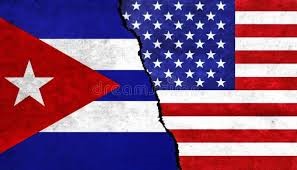
The exchange underscores the long-standing and often strained relationship between Havana and Washington, which has remained fraught for more than six decades despite intermittent diplomatic engagement.
While Cuba continues to attribute its crisis primarily to external sanctions, critics argue that structural inefficiencies, heavy state control of the economy, and domestic policy choices also play a significant role in the country’s prolonged economic difficulties.
Nonetheless, the tentative openness to discussing humanitarian assistance signals a cautious window for limited engagement amid escalating hardship on the island.