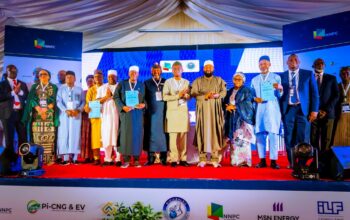
Lawmakers across West Africa have raised concerns over the widening gap between policy commitments and the realities of child protection, as high-level deliberations commenced in Freetown.
The ECOWAS Parliament on Wednesday opened a five-day Joint Committee Meeting to address what officials described as an “implementation crisis” affecting child protection systems across the region.
Despite the adoption of several frameworks, including the ECOWAS Child Policy and Strategic Plan of Action (2019–2030), parliamentarians noted that vulnerable children remain inadequately protected in many member states.
Across urban centres and border communities, the number of children living on the streets continues to rise, driven by poverty, displacement, family instability, and weak social protection systems. Many of these children, officials observed, operate in legal grey areas, leaving them exposed to exploitation, trafficking, forced labour, and abuse.

A delegate at the meeting stressed that the challenge is no longer the absence of legal frameworks but the failure to effectively implement them, calling for a shift from policy formulation to enforcement.
The meeting, hosted in Sierra Leone, has brought together multiple parliamentary committees to examine gaps in legislation, enforcement, and cross-border coordination that continue to undermine child protection efforts.
Regional mobility has emerged as a key concern, with children frequently crossing borders independently or through informal networks. Lawmakers noted that inconsistencies in national laws and weak data-sharing mechanisms have created loopholes exploited by traffickers and other criminal elements.
Officials warned that child protection has evolved beyond a domestic issue into a broader regional security and human rights challenge.
Sierra Leone’s hosting of the meeting reflects its recent legislative reforms, including the revised Child Rights Act (2025), which is being positioned as a model for aligning national laws with international standards.
Delegates are expected to assess the country’s approach, particularly efforts to strengthen institutional coordination, expand rehabilitation services, and improve data systems for tracking vulnerable children.

In addition to formal sessions, lawmakers will undertake field visits to communities with high concentrations of street children, as well as centres providing care and reintegration services, in a bid to align policy discussions with on-the-ground realities.
Civil society organisations and frontline practitioners are also contributing through public hearings, highlighting persistent gaps such as inadequate shelter, limited access to education, and weak family reunification systems.
The ECOWAS Commission is expected to provide policy briefings and regional data to guide legislative reforms and enhance coordination among member states.
At the end of the meeting, parliamentarians are expected to adopt a set of actionable recommendations aimed at strengthening legal frameworks, improving oversight of child protection institutions, and enhancing cross-border collaboration. The outcomes will be forwarded to the plenary of the ECOWAS Parliament and subsequently to the Council of Ministers for consideration.
Observers note that beyond policy alignment, the effectiveness of child protection systems has become a critical measure of governance in the region, particularly amid mounting socio-economic pressures.
“If these systems cannot protect children,” a stakeholder cautioned, “then the credibility of the entire framework is in question.”