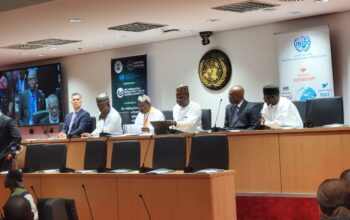
Nigeria and Israel have reaffirmed their commitment to strengthening bilateral cooperation in security, defence, trade, agriculture, technology, healthcare and innovation, as both countries pledged to expand strategic partnerships during the valedictory visit of Israel’s outgoing Ambassador to Nigeria, Michael Freeman.
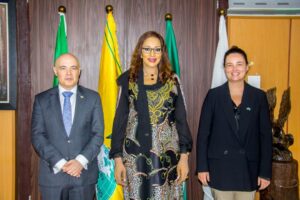
The renewed commitment was made on Monday when Ambassador Freeman paid a farewell visit to the Minister of Foreign Affairs, Ambassador Bianca Odumegwu-Ojukwu, at the Ministry’s headquarters in Abuja.
The meeting highlighted the shared resolve of both nations to deepen collaboration in tackling insecurity, enhancing food security, promoting technological innovation and expanding bilateral trade, with Israel reiterating its readiness to support Nigeria’s development priorities.
Speaking during the meeting, Odumegwu-Ojukwu commended the outgoing envoy for strengthening relations between Nigeria and Israel during his tenure, describing his contributions as laying a solid foundation for even stronger engagement between the two countries.
“I know you are here at a critical period. Under you, everybody saw that there’s a lot of understanding. You’ve made the job so easy for your successor,” the minister said.
She disclosed that the Federal Government was seeking enhanced cooperation with Israel in counter-terrorism, intelligence gathering, intelligence sharing, security financing and the training of security personnel, while also expressing interest in leveraging Israel’s expertise in border security to curb transnational crimes.
According to the minister, security remains central to President Bola Ahmed Tinubu’s development agenda, stressing that sustained economic growth and investment can only thrive in a safe and secure environment.
She pointed to the recent rescue of abducted schoolchildren in Oriire by Nigerian security forces as evidence of the government’s ongoing efforts to address insecurity across the country.
Odumegwu-Ojukwu also identified technology and innovation as key areas for future collaboration, calling for stronger partnerships between Nigerian startups and Israeli technology firms.
“When Nigerian ingenuity meets Israeli innovation, remarkable achievements become possible,” she said, adding that Nigeria is keen to tap into Israel’s globally acclaimed expertise in water resource management and modern agricultural technology to boost food production and strengthen national food security.
In his response, Ambassador Freeman described Nigeria as “an amazing country” blessed with warm and hospitable people, while reaffirming Israel’s commitment to expanding cooperation in innovation, agriculture, healthcare, education, security and skills development.
“We are more than willing to work with Nigeria. We know that after the elections, things will be a lot easier. We are committed to defence and security cooperation with Nigeria,” he said.
The outgoing envoy also noted that annual bilateral trade between Nigeria and Israel, currently estimated at about $200 million, remains well below its full potential. He expressed confidence that both governments would intensify efforts to significantly boost trade, investment and economic cooperation in the years ahead.
Nigeria and Israel have maintained diplomatic relations for decades, with collaboration spanning agriculture, security, healthcare, education and technology. Israel’s globally recognised expertise in precision agriculture, water conservation, cybersecurity and innovation is expected to play an increasingly important role as Nigeria pursues economic diversification, strengthens national security and accelerates sustainable development.