The Federal Government has unveiled an ambitious strategy to position Nigeria as a major player in the estimated $7 trillion global halal economy, with plans to mobilise more than $12 billion in investment and convert the country’s agricultural, manufacturing and consumer potential into jobs, exports and industrial growth.
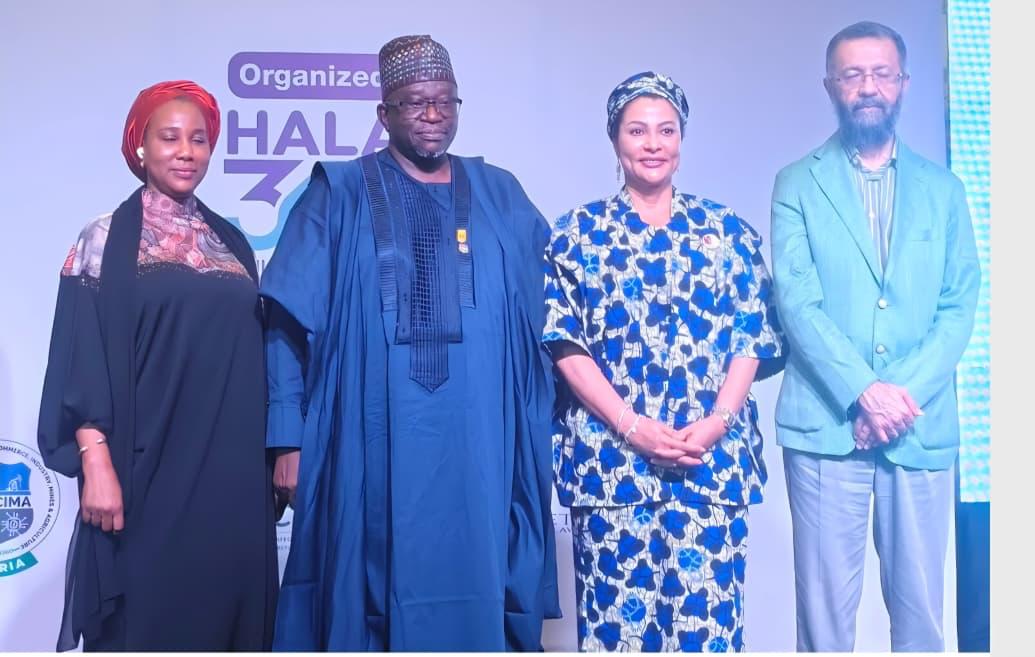
The renewed push was outlined at the Lagos Halal Leadership Reception 2026 held at Eko Hotel in Lagos, where Vice President Kashim Shettima said Nigeria could no longer afford to remain largely a consumer of halal products while other countries captured the higher-value opportunities in production, processing, finance, logistics and international trade.
Shettima, who was represented by the Minister of State for Budget and Economic Planning, Dr Doris Uzoka-Anite, said the halal economy had expanded far beyond food and beverages to include Islamic finance, pharmaceuticals, cosmetics, tourism, logistics, manufacturing and digital commerce.
He said Nigeria possessed the population, natural resources, entrepreneurial capacity and strategic access to African markets needed to become a major force in the rapidly expanding global sector.
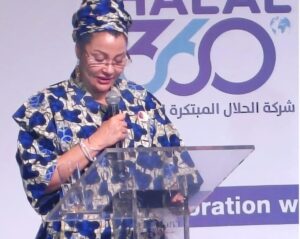
According to the Vice President, the administration of President Bola Ahmed Tinubu has identified the halal economy as a key component of its Renewed Hope Agenda, particularly in efforts to diversify the economy, expand non-oil exports and create employment.
Shettima disclosed that the Nigeria Halal Economy Strategy Implementation Committee, inaugurated on March 3, 2026, had activated its four workstreams and consolidated its implementation programme into 13 delivery clusters, with a target of mobilising more than $12 billion in investment.
He added that the initiative had been presented to the National Economic Council, while Osun, Katsina and Kano states had indicated interest in domesticating the strategy to accelerate halal-related economic activities at the subnational level.
The Federal Government, he said, was also strengthening partnerships with international institutions, including the Islamic Development Bank, the Arab Bank for Economic Development in Africa (BADEA) and the D8 Halal Forum.

He further disclosed that proposals were being developed for a Nigerian Halal Accreditation and Verification Platform that could eventually serve as a continental model, as well as a regional capacity-building centre to be established in collaboration with international partners.
Shettima said the government was working towards presenting the Governance Framework, National Halal Mark, Halal Accreditation and Verification Platform, and associated fees architecture to the Federal Executive Council.
However, he stressed that policies and partnerships alone would have little economic value unless they translated into viable businesses, investments, exports and jobs.
He therefore urged the private sector to take the lead in transforming Nigeria’s halal potential into commercially viable enterprises.
The Vice President called on manufacturers, farmers, financial institutions, logistics companies, tourism operators and technology entrepreneurs to see halal certification, traceability and conformity assessment as instruments for accessing international markets rather than regulatory obstacles.
He also identified non-interest finance as a critical pillar of the strategy, citing Nigeria’s experience with Sukuk as evidence that alternative financing mechanisms could be deployed on a large scale to fund infrastructure and productive sectors of the economy.
Earlier, the Managing Partner of The Metropolitan Law Firm and Coordinator of the reception, Ummahani Ahmad Amin, said the gathering was conceived as a policy and stakeholder engagement platform rather than a commercial event.
She said stronger coordination among government agencies, regulators, investors, financial institutions, businesses and professional organisations was essential to converting Nigeria’s enormous halal potential into sustainable economic value.
The National President of the Nigerian Association of Chambers of Commerce, Industry, Mines and Agriculture, NACCIMA, and member of the Board of Directors of the Islamic Chamber of Commerce and Development, ICCD, Engr. Dr Jani Ibrahim, said Nigeria must move beyond discussions about the potential of the halal economy and begin implementing policies capable of attracting investment and expanding market access.
Ibrahim pledged NACCIMA’s support for efforts to position Nigerian businesses to benefit from emerging halal opportunities, insisting that the sector should be viewed primarily as a trade and investment opportunity rather than merely a certification issue.
Also speaking, the Secretary General of the ICCD, Sheikh Yousef Hassan Khalawi, said Nigeria had the capacity to secure a significantly larger share of the global halal market but needed to retain more value from its raw materials.
He cited Nigeria’s strong position in shea butter production, arguing that the country could earn substantially more by expanding domestic processing, branding and manufacturing rather than exporting raw materials.
Khalawi said Nigeria’s challenge was not simply to increase production but to ensure that the value generated from its agricultural and natural resources reflected the country’s production capacity.
For the financial sector, the President of the Non-Interest Financial Institutions Association of Nigeria, NIFIAN, and Chairman of Arthur Group, Dr Basheer Oshodi, said the country’s non-interest finance industry was prepared to provide the financial architecture needed to support the halal economy.
Oshodi said the sector had moved beyond its emerging stage, pointing to Nigeria’s non-interest banking framework, Sukuk market and expanding Islamic finance ecosystem as evidence of its capacity to support manufacturing, exports, investment and financial inclusion.
He called for closer collaboration among financial regulators, standards bodies and halal institutions to build an integrated ecosystem capable of financing businesses from production and processing to international market entry.
According to him, the success of Nigeria’s halal strategy should ultimately be measured by tangible outcomes, including more export-ready Nigerian companies, increased investment in manufacturing and processing, wider access to international markets and the creation of quality jobs.
The reception, organised by Halal 360 and The Metropolitan Law Firm in partnership with the ICCD, Halal Products Development Company, Nigeria Halal Economy Strategy Implementation Committee Secretariat and NACCIMA, brought together government officials, regulators, investors, financial institutions, manufacturers, exporters, diplomats and business leaders.
Participants agreed that Nigeria’s competitive advantage in the global halal economy would not be secured by its large population and abundant natural resources alone.
They stressed the need to build trusted standards and certification systems, attract substantial investment, strengthen domestic processing and manufacturing, expand international market access and develop globally competitive Nigerian halal brands.
With the global halal economy continuing to expand across multiple industries, Nigeria’s emerging strategy now faces its most critical test: converting its vast potential into bankable projects, productive investments, higher-value exports and sustainable jobs for millions of Nigerians.