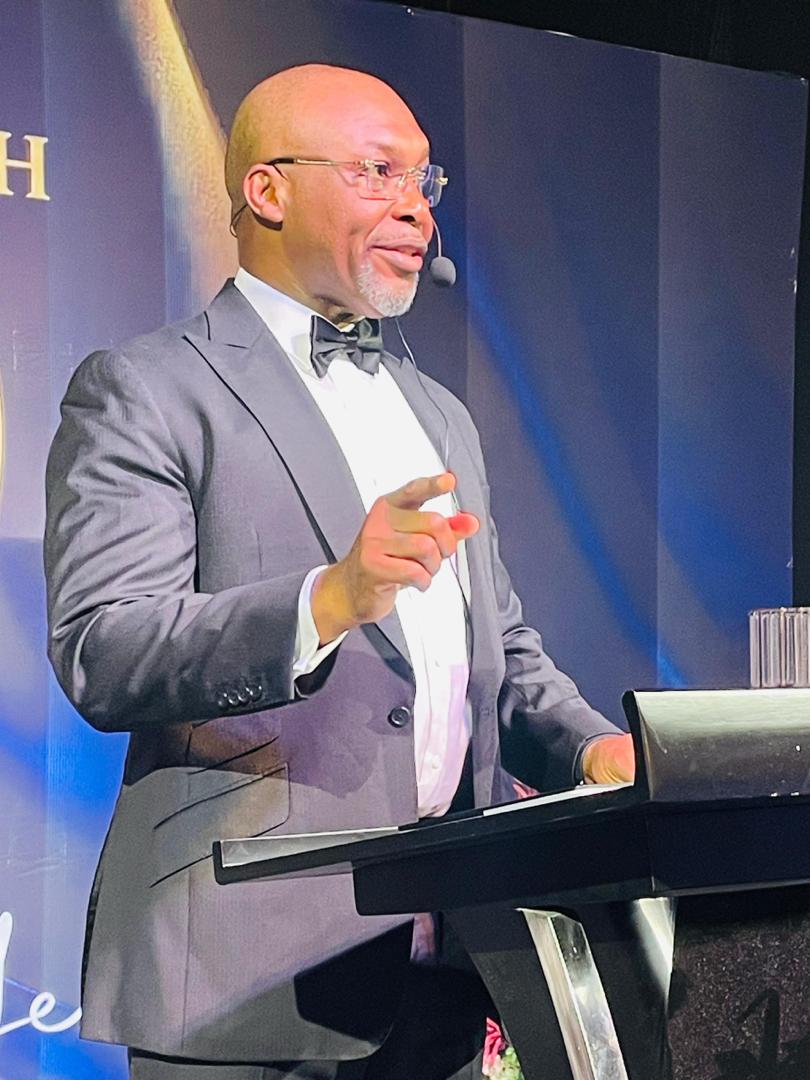
Former Minister of Aviation and policy advocate, Osita Chidoka, has warned that Nigeria’s investment in education remains critically low, describing the situation as a “national emergency” nearly three decades after the return to democratic governance.
Chidoka, speaking at the 70th Anniversary Gala of the Ekulu Primary School Alumni Association (EPSAA) in Enugu at the weekend, cited new analysis indicating that Nigeria’s total public education expenditure in 2026 stands at just 2.14 per cent of Gross Domestic Product (GDP), far below the UNESCO-recommended benchmark of 4 to 6 per cent for developing economies.
Presenting a keynote titled “Ekulu at 70: How One School Tells the Nigerian Story of Decline and the Duty of Renewal,” the Chancellor of the Athena Centre for Policy and Leadership stated that the combined federal, state, and intervention funding—covering allocations by the Universal Basic Education Commission (UBEC) and the Tertiary Education Trust Fund (TETFund)—amounted to approximately ₦9.49 trillion out of a projected ₦442.8 trillion GDP.
The analysis, compiled by the Athena Centre for Policy and Leadership, further showed that Nigeria lags behind several peer countries in education investment, including South Africa (6.7%), Brazil (5.6%), Kenya (4.8%), India (4.1%), and Ghana (3.4%).
“Nigeria is not in the middle of the developing world on this measure. It is below its floor,” Chidoka said. “We have been treating this as a routine budget conversation for too long. The figure is, in fact, a national emergency.”
The report also highlighted disparities in subnational spending, noting that Anambra State allocated 46.9 per cent of its 2026 budget to education, while Enugu State committed 32.2 per cent and is implementing its Smart Green Schools initiative across all wards. Other states identified for strong commitments include Kano, Lagos, Kaduna, Katsina, and Abia, with combined education spending projected at ₦1.8 trillion.
However, the analysis noted that despite Lagos State’s overall fiscal capacity, only 5.6 per cent of its total budget was directed to education, underscoring that scale of resources does not necessarily translate into prioritisation of the sector.
The report also observed a historical reversal between Enugu and Lagos, noting that Enugu’s education spending in dollar terms is now roughly twice that of Lagos, compared to 2000 when Lagos reportedly spent more than six times as much.
Chidoka attributed Nigeria’s long-standing education decline partly to structural adjustments between 1986 and 1999, which he described as “years of the locust,” citing sharp falls in academic salaries and institutional funding during the period. He also argued that the post-1999 democratic era failed to adequately reverse the deterioration despite improved fiscal conditions.
The keynote further referenced findings that a Nigerian professor’s monthly salary reportedly fell from about $1,000 in 1985 to $137 in 1997, while per-pupil education spending in Lagos dropped significantly over the same period.
Beyond diagnosis, Chidoka urged alumni-led intervention, challenging the Ekulu Primary School Alumni Association to implement three strategic initiatives within three years: a data-driven learning outcomes dashboard, a teacher development and recognition fund, and integration into national digital education infrastructure through collaboration with the Nigerian Research and Education Network (NgREN).
“Let’s Get It Done is not charity. It is repayment,” he said, framing the initiative as a responsibility of beneficiaries of stronger public education systems in earlier decades.
Founded in 1956 as All Saints School by Reverend Timothy Bruce Fyffe of the Church of England, Ekulu Primary School remains one of Enugu State’s historic public primary institutions. Its 70th anniversary celebration drew stakeholders who reflected on both its legacy and the wider challenges confronting Nigeria’s education sector.
Education experts continue to warn that inadequate funding, infrastructure deficits, teacher shortages, and declining learning outcomes threaten the country’s long-term development prospects, with international agencies repeatedly urging sustained investment and reform.