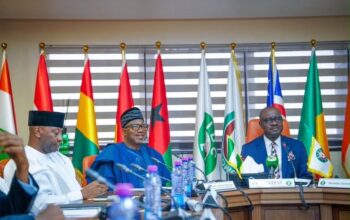
The Nigerian Supreme Council for Islamic Affairs (NSCIA) has submitted its recommendations on the Tax Reforms Bill currently before the National Assembly, through a memorandum presented to the Senate Committee on Finance.
Led by its President-General, the Sultan of Sokoto, His Eminence, Alhaji Muhammad Sa’ad Abubakar, the NSCIA—Nigeria’s apex Islamic body—expressed concerns over the lack of prior notification regarding the public hearing, stating that it only became aware of the proceedings through media reports on Monday.
In its memorandum, the NSCIA emphasized the importance of the proposed legislation to Nigerians, particularly the Muslim community, and urged that all technical, political, and socio-economic concerns raised by different groups across the country be carefully reviewed and equitably addressed.
Key Recommendations by NSCIA
-
Protection of Shariah Law
The NSCIA referenced the 1999 Constitution of the Federal Republic of Nigeria (as amended), which provides for the Shariah Court of Appeal to oversee Muslim personal laws, including marriage and inheritance. It cautioned that any provisions within the Bill that could directly or indirectly infringe upon Shariah law would be unconstitutional and should therefore be removed. -
Modification of Terminology
The Council recommended replacing the term “ecclesiastical” in certain sections of the Bill with “religious” to ensure inclusivity and prevent any perception of bias towards specific religious groups. -
Equitable Consideration for All Nigerians
The NSCIA called for a fair and balanced approach to addressing the concerns raised by various stakeholders, ensuring that the final version of the Bill reflects the interests of all segments of the country.
Support for the Bill and Commitment to Constructive Engagement
Despite these recommendations, the NSCIA expressed its support for the passage of the Bill, acknowledging the opportunity to contribute to the legislative process. The organization reaffirmed its commitment to constructive engagement in national policy formulation and legislative reforms that impact religious, economic, and social affairs in Nigeria.
The submission underscores the NSCIA’s dedication to advocating for policies that align with constitutional provisions while ensuring inclusive and fair governance for all Nigerians.