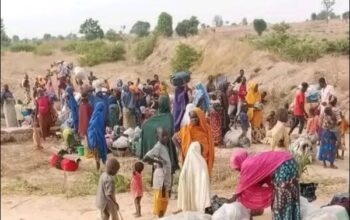
A renewed wave of violence in northeast Nigeria has displaced more than 5,000 residents of Ngoshe community in Borno State, deepening the humanitarian crisis in Gwoza Local Government Area.
The international medical humanitarian organisation Médecins Sans Frontières (MSF) confirmed it has launched an emergency response in Pulka, where thousands of displaced persons have taken refuge following deadly attacks on March 3.
According to MSF, the assault left many people dead and others abducted, forcing residents to flee to Pulka, located about 15 kilometres from Ngoshe. Survivors recounted fleeing in haste, abandoning homes and livelihoods destroyed in the violence.
A displaced resident, Safiya Mohammed Aga, said many arrived with nothing. “Our homes were bombed, everything we owned was gone. We ran for our lives. Some of us arrived here without clothes or anything at all,” she said.

With no formal shelter in place, displaced families are now sleeping in open spaces and along streets, exposed to harsh weather conditions and insecurity. Women, children and the elderly remain the most vulnerable, facing severe shortages of food, clean water and sanitation facilities.
MSF warned that the lack of basic services is heightening the risk of disease outbreaks, particularly among children. In response, the organisation began a four-week emergency intervention on April 10 to address urgent needs.
So far, over 900 families have received essential non-food items, including cooking utensils, sleeping mats, mosquito nets and water containers. In addition, 884 dignity kits—containing menstrual hygiene materials, soap and oral care items—have been distributed.
To mitigate water shortages, MSF teams are supplying approximately 16,000 litres of safe drinking water daily, alongside efforts to rehabilitate sanitation facilities and promote hygiene awareness.
Despite the intervention, MSF officials cautioned that current support is insufficient to meet the scale of the crisis. Abdoulaye Mahmoudoune, the organisation’s emergency field coordinator, said urgent assistance is still required.
“People urgently need food and improved access to water, sanitation and hygiene services. We are responding, but we cannot meet these overwhelming needs alone,” he said.

The situation in Gwoza reflects the broader impact of prolonged insurgency across Borno State, where repeated attacks have displaced communities and strained limited infrastructure. Health facilities remain overstretched, while humanitarian funding continues to decline.
MSF has been supporting healthcare delivery in the area, including services at Gwoza General Hospital since August 2025, as well as maternal and child health programmes in surrounding communities and nutrition support for malnourished children in Maiduguri.
However, the organisation warned that funding shortfalls and a reduced humanitarian presence are putting critical services at risk. It called on aid agencies to scale up interventions in Pulka, particularly in food distribution and water, sanitation and hygiene services, while urging international donors to increase sustained funding for healthcare in northeast Nigeria.
As displacement persists, thousands of families in Pulka remain in urgent need of assistance, facing an uncertain future amid ongoing insecurity.