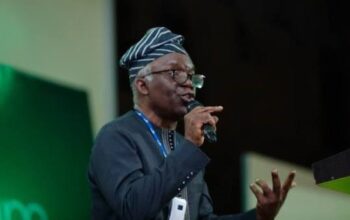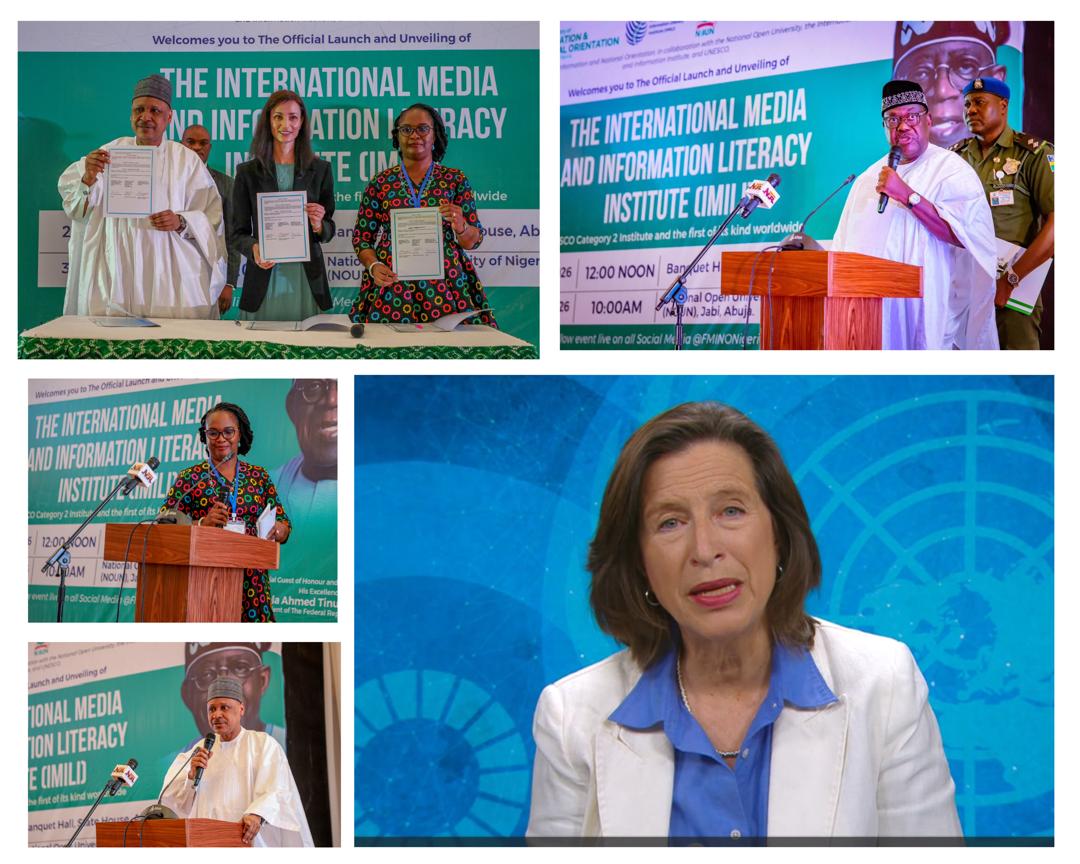
Top United Nations officials have warned of a deepening global information crisis, urging urgent action to rebuild trust in the digital space as leaders gathered in Abuja for the launch of the International Media and Information Literacy Institute (IMILI).
Speaking at the high-level event held at the Presidential Villa, the United Nations Under-Secretary-General for Global Communications, Melissa Fleming, said the world is confronting a dangerously fragmented information ecosystem that threatens peace, human rights, and sustainable development.
“Our world urgently needs an information ecosystem it can trust—one that promotes peace, sustainable development, and human rights,” she said.
The institute, established under the auspices of UNESCO, is described as the first of its kind globally and positions Nigeria at the forefront of international efforts to counter misinformation and strengthen media literacy.
Fleming cited findings from the UN’s 2025 Global Risk Report, which identified misinformation and disinformation as fast-rising global threats capable of eroding public trust, destabilising societies, and weakening democratic institutions.
She highlighted the UN’s Global Principles for Information Integrity, launched in 2024, which focus on strengthening societal trust, promoting healthy information ecosystems, empowering citizens through digital literacy, supporting independent media, and advancing transparency through research, all anchored on human rights protections.
President Bola Tinubu, represented by the Secretary to the Government of the Federation, George Akume, described the launch of IMILI as a milestone for Nigeria, Africa, and the global community.
He said the initiative comes at a critical time when the spread of false information is increasingly challenging governance, social cohesion, and democratic stability. He urged Nigerians, particularly young people, to embrace critical thinking and responsible information use.
The President also reaffirmed the Federal Government’s support for the institute through funding, partnerships with the National Open University of Nigeria, and continued collaboration with UNESCO.
Adding a global perspective, UNESCO’s Assistant Director-General for Communication and Information, Mariya Gabriel, said media and information literacy has become an essential civic skill in modern democracies.
She noted that although 171 countries recognise its importance, only 17 have fully integrated it into national strategies, with just nine African countries embedding such frameworks in their education systems.
Gabriel also cited a UNESCO survey indicating that 62 per cent of digital content is shared without verification, warning of widening inequalities in digital access and persistent online harassment, particularly affecting women and girls.
Nigeria’s Minister of Information and National Orientation, Mohammed Idris, described IMILI as a reflection of the country’s leadership in promoting informed citizenship and safeguarding information integrity.
He said the institute would serve as a global hub for research, training, and policy engagement, bringing together stakeholders across media, education, and governance.
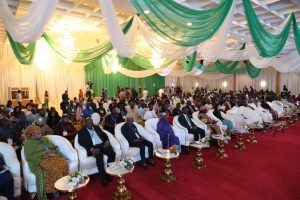
The event attracted senior government officials, international organisations, and industry stakeholders, reinforcing the growing consensus that tackling misinformation requires not only technological solutions but also education, collaboration, and sustained political commitment.
With the launch of IMILI, Nigeria is positioning itself at the centre of global efforts to reshape how information is produced, shared, and trusted in an increasingly complex digital age.