The United Nations Office on Drugs and Crime (UNODC) has underscored that human trafficking transcends criminality, describing it as a direct assault on human dignity, a barrier to development, and a threat to national and global security.
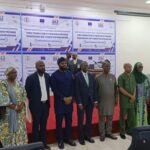
Speaking at the 27th National Stakeholders’ Consultative Forum (NSCF) on Human Trafficking, organized by the National Agency for the Prohibition of Trafficking in Persons (NAPTIP) on Wednesday in Abuja, UNODC Country Representative in Nigeria, Dr. Cheikh Toure, reaffirmed the agency’s commitment to Nigeria’s anti-trafficking efforts.
“Human trafficking isn’t just a crime—it is an assault on human dignity, a drag on sustainable development, and a threat to national security,” Toure stated.
He lauded Nigeria’s comprehensive approach to combating trafficking, emphasizing the significance of the NSCF as a cornerstone in the country’s national response. “This forum brings together federal and state actors around a shared vision for a trafficking-free Nigeria—where policy translates to practice.”
Toure highlighted the importance of a multi-sectoral, victim-centered, and unrelenting response to trafficking and acknowledged the success of the From Policy to Action project, implemented in partnership with NAPTIP and supported by the Swiss government.
He commended NAPTIP’s Director-General, Professor Fatima Waziri-Azi, for her leadership, and extended appreciation to the Attorney General of the Federation, Lateef Fagbemi (SAN), state governments, international development partners—including the European Union, France, Italy, Netherlands, Spain, the International Organization for Migration (IOM), ECOWAS, the International Centre for Migration Policy Development (ICMPD)—and Civil Society Organisations (CSOs), for their contributions to the national fight against human trafficking.
Delivering the keynote address, the Attorney General of the Federation and Minister of Justice, Lateef Fagbemi (SAN), called on State Commissioners for Women Affairs to leverage their positions to drive meaningful change at the sub-national level.
“I urge Commissioners for Women Affairs across the country to advocate for and influence policies, budgets, and programmes that directly or indirectly affect human trafficking and exploitation,” he said. “The creation of budget lines to support State Task Forces on Human Trafficking is essential to institutionalizing their work across the country.”
He reaffirmed the Federal Ministry of Justice’s commitment to providing ongoing policy support, legal reforms, strategic coordination, and advocacy in collaboration with NAPTIP and other stakeholders.
In a goodwill message, Swiss Ambassador to Belgium and NATO, Jacques Pitteloud, praised Nigeria’s progress and reaffirmed Switzerland’s long-term commitment to the anti-trafficking effort.
“Our partnership with Nigeria goes beyond financial support. It is founded on trust, shared priorities, and joint ownership,” he stated. He commended NAPTIP’s grassroots approach and highlighted the importance of local government involvement, particularly through the Association of Local Governments of Nigeria (ALGON), in achieving national goals.
Pitteloud also pointed to recent innovations, including the development of a centralized dashboard and national reporting hub, which will enhance data collection and inter-agency coordination.
In her welcome address, Director-General of NAPTIP, Professor Fatima Waziri-Azi, outlined the agency’s key achievements under its “5Ps” strategic framework: Policy, Prevention, Protection, Prosecution, and Partnership.
She reported that between 2022 and 2024, the agency rescued over 7,000 victims and secured 205 convictions. Notable milestones include the development of digital reporting tools, expanded public awareness campaigns, the launch of over 200 Anti-Human Trafficking School Vanguards, and the extension of State Task Forces to 24 states.
“We take pride in our progress—from establishing the Human Trafficking Digital Centre in Katsina to modernizing our training facility with support from the German government. However, the fight against human trafficking demands deeper collaboration, stronger political will, and sustained engagement at all levels,” Waziri-Azi concluded.