Millions of children worldwide continue to suffer from malnutrition—a crisis that is tragically visible in their frail frames and weary eyes. Yet, beyond the physical toll lies a hidden dimension: the psychological wounds that malnutrition inflicts on both children and their caregivers.
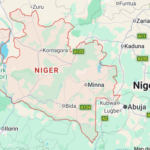
Across seven northern Nigerian states—Zamfara, Kano, Katsina, Kebbi, Bauchi, Borno, and Sokoto—Doctors Without Borders/Médecins Sans Frontières (MSF) is confronting this dual challenge head-on. In 2024 alone, MSF treated more than 300,000 malnourished children, marking a 25 percent increase from 2023. But with each admission comes emotional distress that affects both young patients and their caregivers.
“Malnutrition doesn’t only attack the body,” explains Kauna Hope Bako, MSF’s Mental Health Supervisor in Bauchi. “It affects the child psychologically, emotionally, and behaviourally.”
Children suffering from malnutrition often become irritable, withdrawn, or developmentally delayed—struggling to walk, talk, or engage like their peers. The emotional suffering is profound. “The child feels detached and sad, unable to play like others,” Bako notes. “He’s going through pain and stress—not only from malnutrition but from accompanying diseases.”
The link between nutrition and mental health is circular. Malnutrition can cause cognitive and emotional problems, while psychological distress, neglect, or abusive home environments can contribute to poor nutrition. “They’re two sides of the same coin,” Bako says. “One can lead to the other.”
The mental strain extends to mothers and caregivers, who bear the emotional weight of their child’s illness. “At triage, you see anxiety, fear, and helplessness,” Bako observes. “Some caregivers blame themselves or feel ashamed.”
MSF’s approach recognises that supporting caregivers is vital to a child’s recovery. “If the mother is not emotionally stable, it can unconsciously affect the child,” Bako explains.
MSF integrates mental health care into its nutrition programmes through a range of supportive interventions:
-
Psycho-stimulation sessions: Using play, colour, and gentle touch to help children regain developmental skills and strengthen caregiver bonds.
-
Psycho-education: Teaching caregivers how stress impacts recovery and equipping them with coping strategies.
-
Support groups: Creating safe spaces for caregivers to share experiences and build resilience.
-
Recreational activities: Offering emotional relief from hospital life.
-
Individual counselling: Providing one-on-one care for those in acute distress.
Recognising the importance of fathers, MSF also holds sessions for men to encourage emotional and practical involvement in their children’s care.
The organisation further ensures that all health workers—doctors, nurses, and support staff—are trained in psychological first aid and effective communication. “Communication itself can be therapeutic,” Bako says. “When a mother feels listened to, that in itself is healing.”
By integrating mental health into its nutrition programmes, MSF is helping families move beyond survival to recovery. “It’s not just about treating the disease,” Bako emphasises. “It’s about restoring hope, dignity, and connection.”
Since 2022, MSF has repeatedly warned of worsening malnutrition in northern Nigeria. Between January and June 2025, the organisation admitted 32,940 severely malnourished children to inpatient centres and 136,255 to outpatient facilities. During the same period, 30,880 mental health sessions were conducted. In Bauchi alone, since 2024, MSF has provided psychological support to 113,191 malnourished children and their caregivers.
As the world marks World Mental Health Day, MSF reaffirms its commitment to holistic care—ensuring that every child has the chance not only to survive but to thrive in body and mind.